Inventing for Composition
After talking with a couple fellow Northern Indiana Pastel Society members today about developing style, I thought about my talk and then decided to add this post as a supplement in case it might be helpful for anyone else. I do believe style is kind of just “what you do” and that becomes more distinct the more you work, and I also believe that forcing a style onto your work might actually hinder growth as an artist, but to get down to it, I’ll just start.
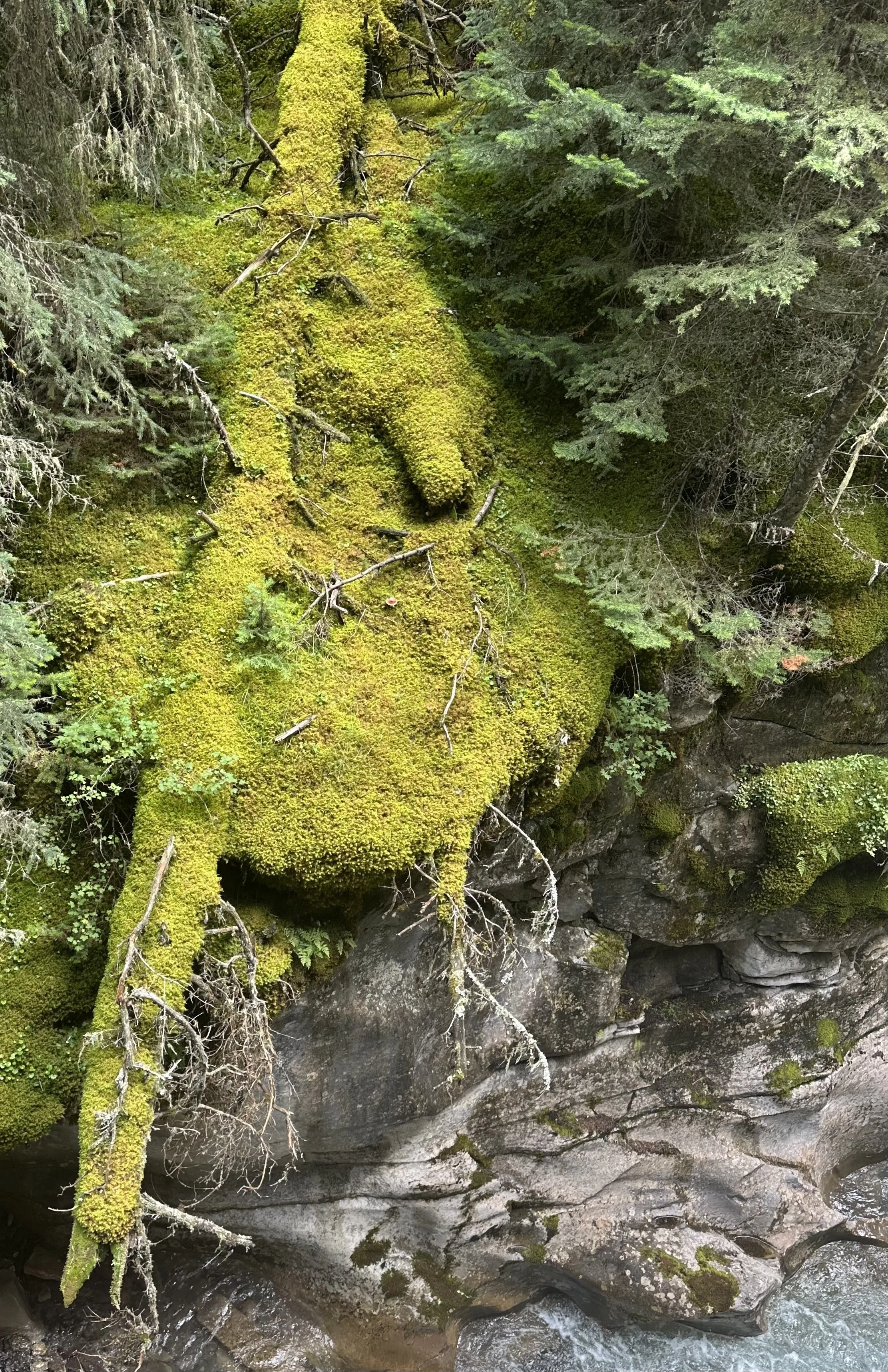
This is a photo from Alberta Canada that I took last summer. I wanted to paint it because the greens in the moss were so vibrant and the fact that the tree was becoming “one with the rock” was also really interesting to me. Knowing that during most of the winter this brilliant color was just buried in snow also excited me because I “got to see it” and not everyone could see it all the time. But I put off painting it because I didn’t think it would make a very interesting painting.
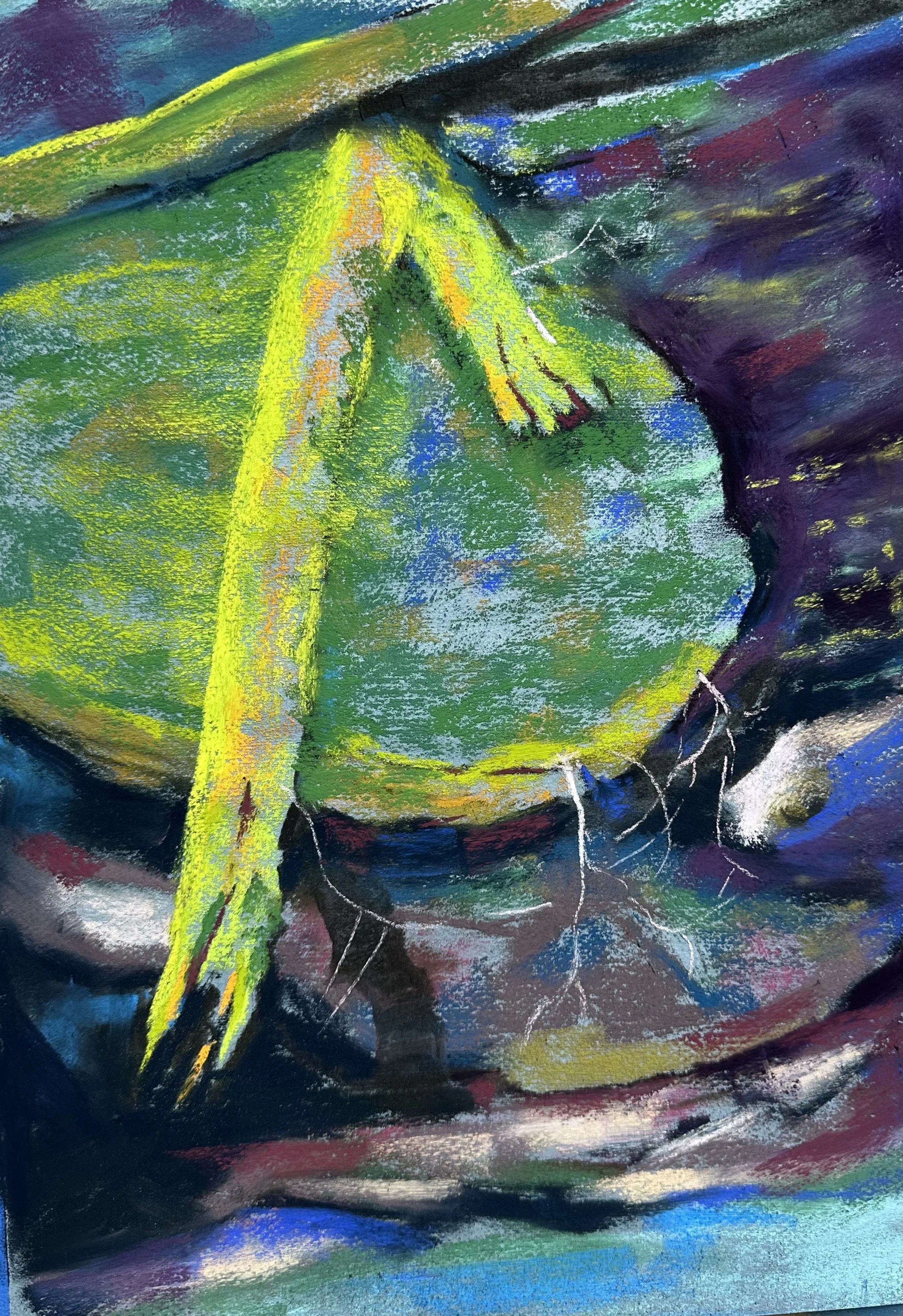
This was my first pass at the painting. As you can see, there is plenty of green. And the general idea is there, but it is not very dynamic. But the photo isn’t very dynamic either. So what do I do? I can’t go back to Alberta and try again with the photo. So I thought, maybe I need to invent something to create a more interesting composition.
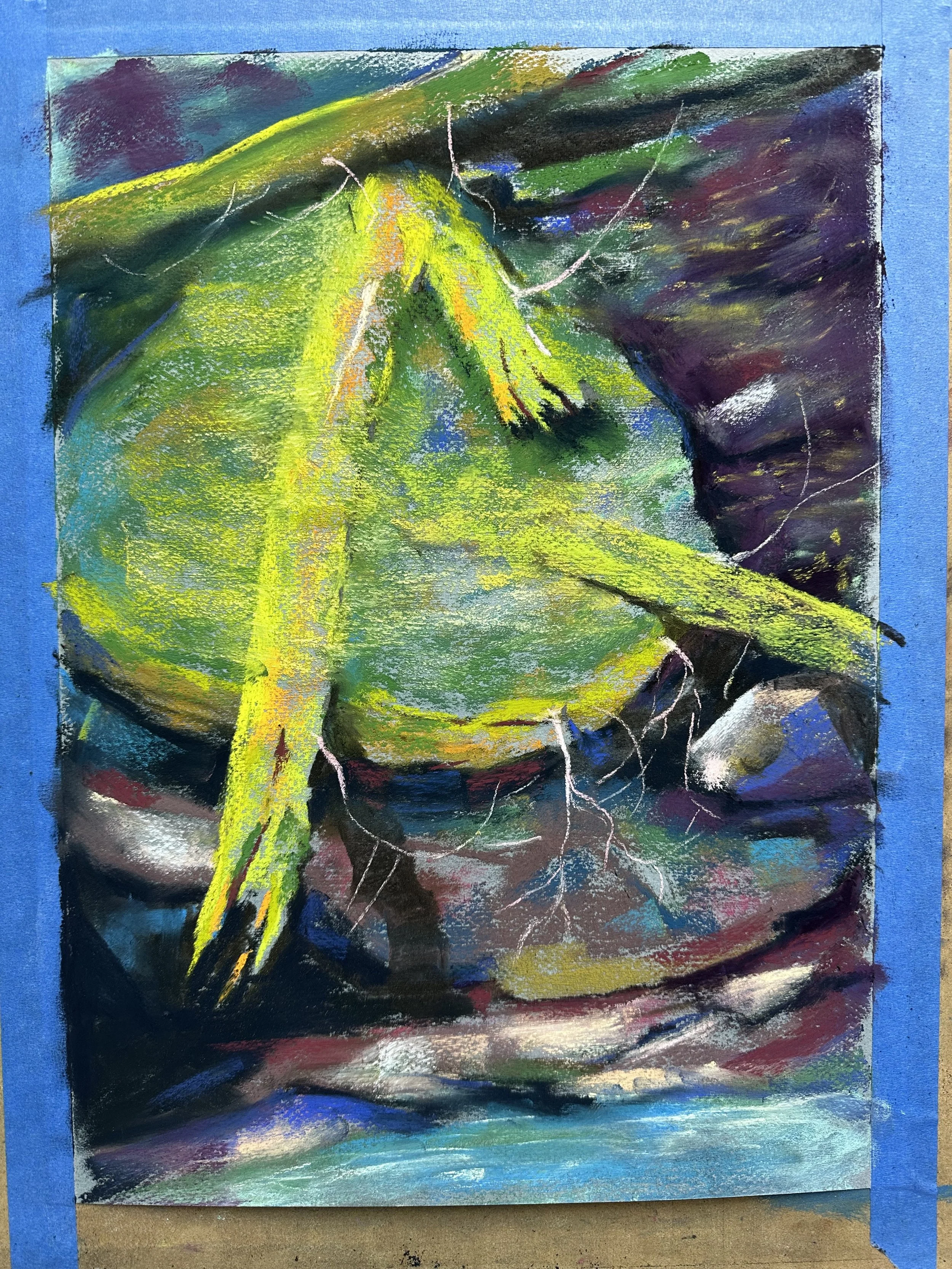
How I did that was by bringing another log onto the scene. This helped to guide the viewer’s eye into the painting from the right side, and it also created a little variety in the shape in the middle of the image where all that green is hanging around. But was that enough? I didn’t think so.
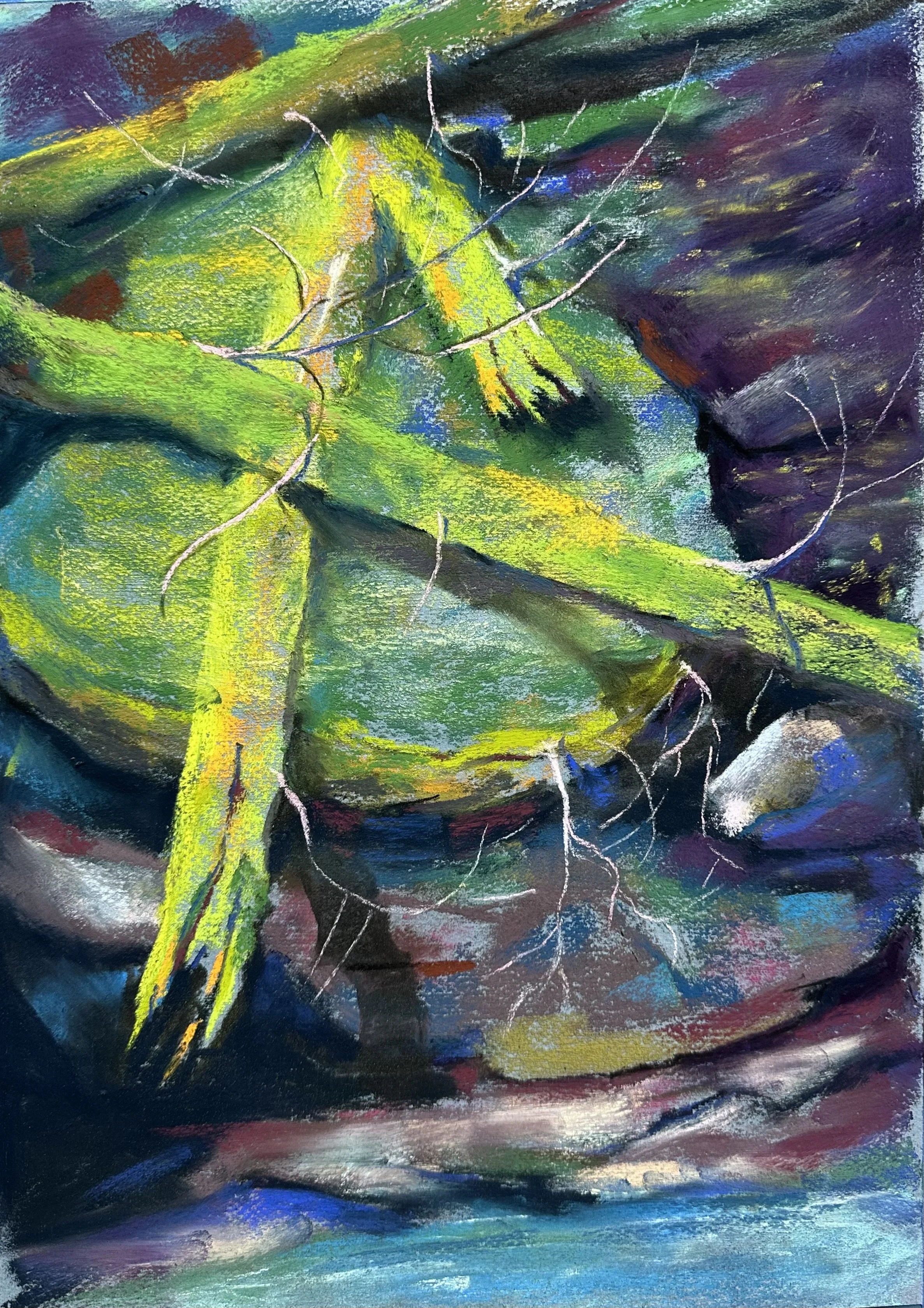
Rather than worry about what would happen to all that green in the middle if I painted over it, I just took that log and made it travel the length of the painting so that it had a chance to cast more shadows and create more contrast over the otherwise flat, green, mossy rock. But was that enough?
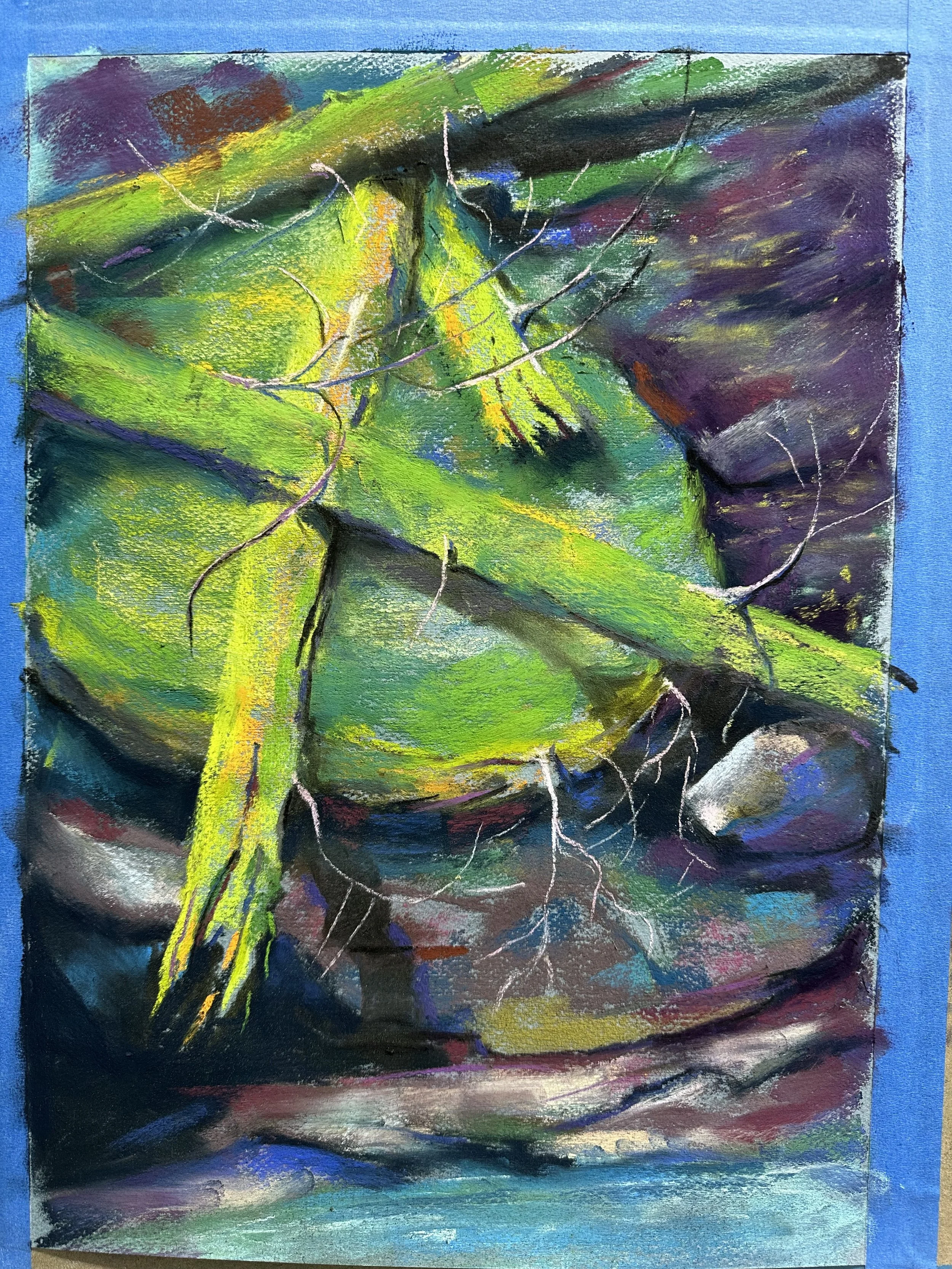
I didn’t really do much here aside from adding some roots and branches with sweeping curves to create some shape contrast in response to the hard edges of the rocks. But what I do think is that in this series of images you can see from the reference that even though I loved seeing that mossy tree on that rock in Canada, I did not feel that I must represent exactly what I saw for the painting to be a good one. I do think that the likeness is extremely important in portraiture, but when it comes to things like this, it’s best not to let the facts get in the way of something that may be more beautiful.
